
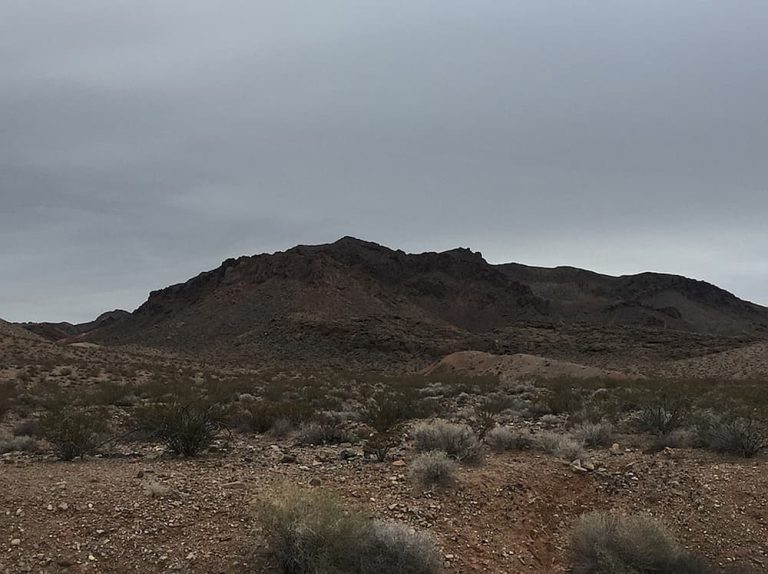
Railroad Valley lies within Nevada’s central Basin and Range province, an area defined by deep, fault-bounded basins and uplifted carbonate ranges formed by crustal extension since the Miocene. The valley itself is an asymmetric graben, dropping eastward along major normal faults that channel deep geothermal fluids toward the surface.
The subsurface sequence consists of thick alluvial fill and volcanic rocks overlying Cambrian–Pennsylvanian carbonates and siliciclastic formations, which act as the primary permeable geothermal reservoir units. These carbonates are locally fractured and brecciated, providing excellent fluid pathways and storage.
Evidence from historic oil and geothermal wells in the area (e.g., Grant Canyon and Bacon Flat fields) shows elevated reservoir temperatures of 116–122 °C at 1–1.5 km depth, caused by convective upflow of meteoric waters heated during deep circulation. These fluids rise along range-front and intra-basin faults, depositing silica and clays that locally seal and self-reinforce reservoir boundaries.
In the Ignis lease area, magnetotelluric (MT) imaging indicates conductive zones around volcanic vents, consistent with active geothermal upflow beneath a shallow alluvial cover. The working model envisions a moderate-temperature, convective geothermal system fed by deeply circulating meteoric water, heated by the regional geothermal gradient, and focused along fault intersections and buried vent complexes.
This setting represents a textbook Basin and Range geothermal play, combining:
- Fault-controlled permeability and upflow,
- Carbonate-hosted reservoir potential, and
- Shallow conductive anomalies aligned with volcanic and structural features.
Together, these factors define a robust exploration target with strong analogs to producing geothermal systems elsewhere in central Nevada.
- Ignis H₂ Energy has added the 5,079-acre Railroad Valley lease (Nye County, Nevada) to its U.S. geothermal portfolio following completion of geological and geophysical due diligence. The area lies within the Basin and Range province—an extensional basin known for active geothermal systems and elevated heat flow.
- Over recent months, Ignis completed a comprehensive geologic and geophysical review, integrating historic well data, stratigraphic correlations, and a newly constructed Leapfrog 3D model. The study confirmed strong geothermal potential associated with deep fault-controlled fluid circulation systems similar to those that formed the nearby Grant Canyon and Bacon Flat geothermal-oil reservoirs, where 120 °C gradients and active hydrothermal alteration have long been documented.
- To refine imaging of the deeper conductive horizons, Ignis deployed 153 magnetotelluric (MT) stations, which identified broad low-resistivity zones surrounding volcanic vents—a key signature of upflowing geothermal fluids in Railroad Valley’s Miocene-to-Holocene extensional basin setting.
